
This article by Stephen Pimentel was published at Palladium Magazine on December 5th, 2025. To learn more about the lost history of humanity and what lessons it holds for today subscribe to our print edition now and receive PALLADIUM 19: Long History.
Reflection on the ancient world often brings to mind the city-state of Athens, the white columns of the Parthenon, and its philosophers such as Socrates, Diogenes, or Zeno. This seems ancient enough to us, and might seem to be the beginning of what we think of as Western civilization. And yet, already in the fifth century BC, the classical Greeks themselves looked back to a different vanished world, a lost civilization of the Mediterranean further east. It was the world remembered in the Iliad and the Odyssey, of warriors like Achilles besieging Troy and seadogs like Odysseus wandering across strange lands. When the Athenians contemplated antiquity, they reflected on what we today call the Bronze Age: an era defined by a metal that does not occur in nature and which dated from 3300 BC to 1200 BC, a timespan as long as the time from us back to Jesus Christ and Julius Caesar.
Bronze alloy is a fabrication, a man-made alloy. The formula was simple enough, a recipe known to smiths from the banks of the Nile to the hillforts of the Danube. You took copper, soft and plentiful and the color of the dying sun, and added tin in a proportion of about ten percent, a ratio arrived at not by calculation but by centuries of trial and error. The added tin made the difference between a metal that bends and a metal that cuts. This technological shift allowed for complex casting and a hard edge for tools and weapons.
Bronze was the strength of the age, the chisel that cut the stone for the Pharaoh’s limestone, the sword that severed the artery, the pin that held the cloak, a synonym for strength in poems written down on papyrus. The material divided the strong from the weak. Without the tin, you had only copper, which bent. You were soft and vulnerable and likely dead.
This necessity meant that for over two millennia, the great civilizations of the Mediterranean had a problem of geography that became a problem of survival. All of them, the Greek-speaking Mycenaeans in their Aegean citadels, the Egyptians along the Nile, and the Hittites on the Anatolian plateau, possessed copper in abundance. They had gold, timber, and grain. They had the favor of their gods and the discipline of their scribes. What they did not have was tin. They had built their political order, their armies, their economies, and their sophisticated diplomacy, on a metal that did not exist in their own soil.
This age of civilization was not a time of isolation. It was an era of globalization on a remarkable scale. A king in Mycenae could commission a sword whose blade was forged from copper mined in Cyprus and tin mined in Afghanistan, a weapon that was, in its molecular structure, a record of the known world. It was a time of far-reaching connectivity, a network of overland routes stretching across the Eurasian landmass and shipping across the Mediterranean Sea and even Indian Ocean—but a network that would ultimately prove to be fragile.
The Riddle of the Tin Mountains
For a long time, archaeologists didn’t know where the tin came from. This was the “tin problem,” a phrase that suggests a logistical hiccup rather than a centuries-long mystery that already baffled the historians of the classical world like Herodotus and Pliny. The texts were not so much silent as coy. The scribes of Mari and Ugarit listed the metal, annaku in Akkadian, AN.NA in Sumerian. They listed the prices, the weights, and the middlemen. But they did not list the mines. The tin came from “the East,” or it came from “the Mountains,” or it came from a market that had bought it from another market. It was a commodity with no origin, a ghost metal that seemed to simply appear in the palace workshops of Thebes and Knossos by magic.
We now know that, in the early centuries, tin came from far to the east, from Central and South Asia, from the Zeravshan Valley in what is now Tajikistan and the Hindu Kush in Afghanistan. There, in the high, thin air, miners dug into the rock, crushed the ore, smelted it into ingots, and sent it west by a relay of donkeys. The distance was striking. From the mines of Afghanistan to the furnaces of Mesopotamia is a journey of thousands of kilometers, across the Zagros Mountains, across the Iranian plateau, through the bandit country of Elam. The records of the Assyrian merchants of the 19th century BC tell of their trade network stretching out from their colony at Kanesh, in central Anatolia.
The Kültepe texts, in the form of twenty thousand cuneiform tablets found at Kanesh, are not concerned with poetry or myth but ledgers. They are the receipts of a family business. They record, with a dryness that borders on the hypnotic, the arrival of caravans from Aššur, the Assyrian home city. They record the movement of tin: about forty-eight tons of it over thirty years, carried on the backs of black donkeys.
These donkeys were the heavy transport of the Bronze Age. A single donkey could carry perhaps sixty kilograms, or two talents. It took a fleet of them, a convoy moving slowly through the dust, climbing the passes, paying the tolls, and bribing the local bandits. The merchants were focused on profit. They bought tin in Aššur for fifteen shekels of tin to one shekel of silver. They sold it in Anatolia for seven to one. They doubled their money—if they survived the journey, if the donkeys didn’t die, and if the taxes didn’t eat them alive.
The merchants, squeezed by the taxes of the local Anatolian rulers, established a smuggling route. They called it the harrān šūkinatum, the “narrow track.” They took their donkeys off the main highway to avoid the customs houses. Assyrian merchants in wool tunics, sweating in the Anatolian sun, goaded lines of donkeys laden with the strategic resource of an empire down goat paths to protect the enterprise’s profit. The hunger for margin and willingness to evade the state remain human constants. The donkeys stumbled under the weight of the metal that would make the sword that would kill the man.
This was the Eastern Route. It fed the early empires, relying on the stability of the lands between the Hindu Kush and the Mediterranean. It relied on Elam and Mari. It relied on a peace that was encouraged by the mutual necessity of the metal. As long as the caravans moved, the bronzesmiths in the west could work. The Assyrians were the middlemen, logistics experts who understood the art of geographic arbitrage in supply and demand. They moved the tin from where it was common to where it was rare but needed.
However, the caravans were slow, and the mountains were high, and the kings of the Mediterranean looked for other options. The tablets tell us of the volume, but they also hint at the fragility. A war in the Zagros, a drought in the Khabur triangle, and the lines go dead. The furnaces go cold. The king waits for his armor, and the armor does not come.
The shift, when it came, was toward the water. By the Late Bronze Age, the kingdoms had turned to the sea. This was a cosmopolitan era of the great powers: New Kingdom Egypt, the Hittite Empire, the palaces of Mycenae. We have letters between pharaohs and kings in which they address one another as “brother,” complain about the quality of gold gifts, arrange marriages, and negotiate treaties. It was a club, and its members needed tin. The sea allowed for volume. A donkey carries sixty kilograms; a ship carries tons. The sea allowed the trade to scale up to match the ambitions of the empires.
Underwater Finds Reveal the Startling Scale of Trade
In 1982, a sponge diver off the coast of Grand Cape in Turkey noticed “metal biscuits with ears” on the seabed. He had found what came to be known as the Uluburun shipwreck. It is dated to the late 14th century BC, the high noon of the Bronze Age international trade. The ship was fifty feet long and built of cedar. It was a floating palace, a microcosm of the global economy, sunk in a single afternoon.
The inventory of the Uluburun ship is a litany of the era’s desires. It carried ebony logs from Africa, dark and heavy as stone. There was ivory from hippopotamus and elephant, the raw material for the inlay work on royal furniture. The hold contained ostrich eggshells, the ultimate novelty item, and terebinth resin in Canaanite jars, the scent of the Levant. It carried glass ingots colored cobalt blue and turquoise, meant to imitate lapis lazuli and turquoise stone, the synthetic luxury of the day. There were gold chalices and faience cups and cylinder seals.
But mostly, it carried metal. There were ten tons of copper, in the shape of “oxhide” ingots, mostly from Cyprus, the copper island. Perhaps most significantly, it carried one ton of tin. The ratio tells the tale: ten to one, the recipe for bronze. This was not a merchant-ship peddling trinkets, but a bulk shipment of industrial raw materials, likely a royal consignment, moving from the Levant toward the Aegean. The ship was a factory in kit form. Eleven tons of metal could outfit an army, enough bronze for five thousand swords.
For decades, the question of the Uluburun tin was a subject of vigorous academic debate. Did it come from the East, from the old Silk Road sources in Afghanistan, or did it come from the West, suggesting a connection to the Atlantic? As with much archaeology, the evidence was fragmentary. We knew about this trade network only because of its failures. Had the Uluburun ship reached its destination, the tin would have been melted down, turned into swords or plowshares, and likely lost.
The breakthrough also required an advance in geochemical techniques. Archaeologists had initially relied on lead isotope analysis, in which the decay of uranium and thorium creates a geological clock within the metal. While this proved particularly effective for copper, allowing scientists to trace many Bronze Age ingots to Cypriot ore, it had limitations for other metals. To trace the tin, scientists developed a multivariate approach, examining a number of isotopes and trace elements to create a broad signature.
The results of this analysis told a story of a diversified supply chain. Some of the tin appeared to match the signature of the eastern mines in Tajikistan. Other evidence pointed toward the Taurus Mountains of Turkey, suggesting Anatolia had its own sources despite previous assumptions that the Kestel mine was exhausted. The Uluburun ship proved a snapshot of civilizations operating at high efficiency, a network that could aggregate materials from three continents, trusting that the copper from Cyprus would always meet the far-traveling tin.
The real shock, however, came when this multivariate technique was used to trace ingots found in shipwrecks off the coast of Israel. These ingots did not come from Afghanistan or Turkey. The broad isotopic signature confirmed that they came from Cornwall, in the south-westernmost corner of Great Britain. This origin provided the definitive vindication for those who suspected an Atlantic link, proving that the trade networks of the Bronze Age were even more vast than previously imagined.
Tin Islands Hidden in The Atlantic Fog
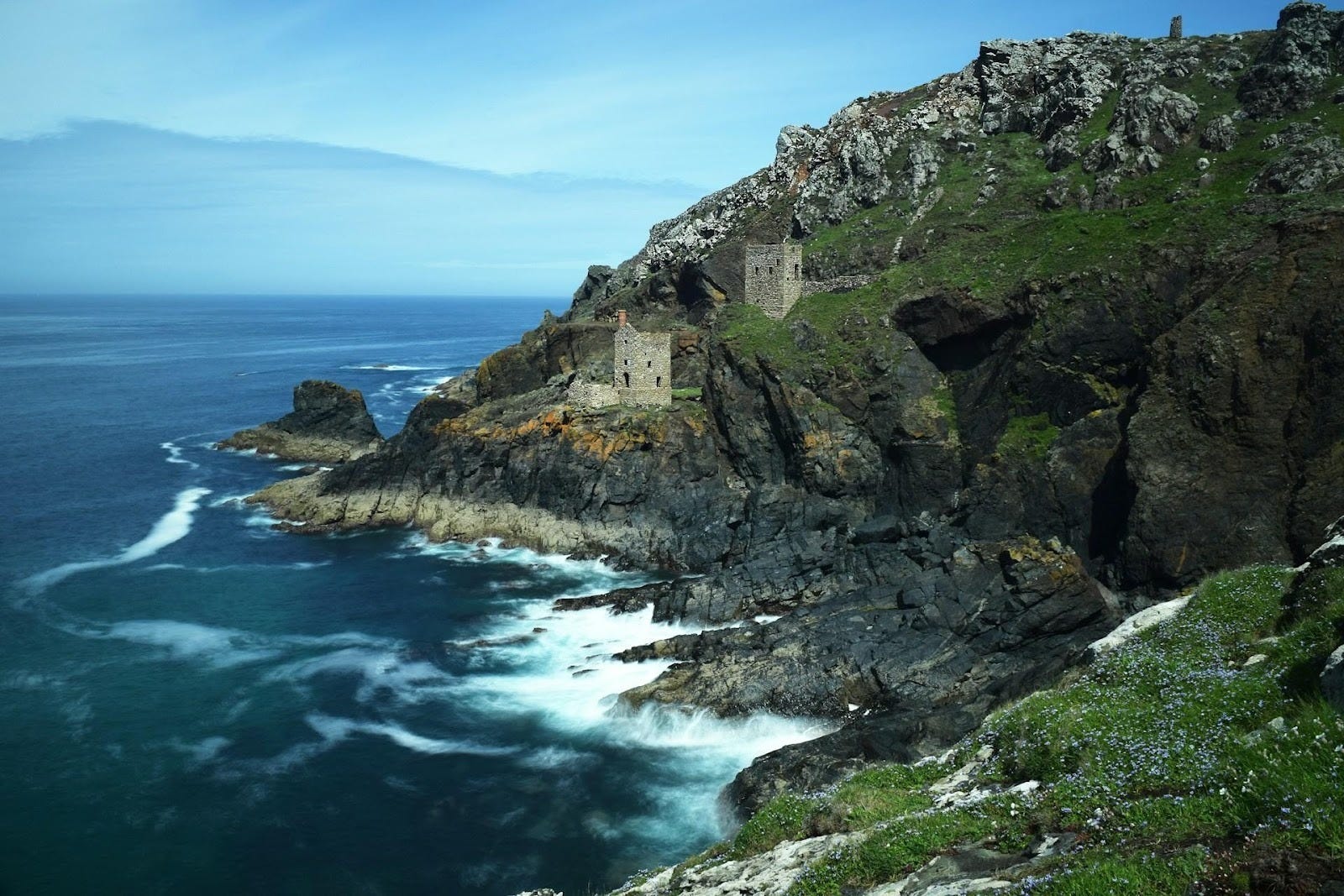
Cornwall is a place of granite and gorse and a wind that feels like it originates in the center of the Atlantic. In the 13th century BC, to a resident of Thebes or Babylon, Cornwall was not merely foreign; it was theoretical, a place of mist and monsters at the edge of the map. Yet, the isotopes are clear.
The lead isotope ratios, the trace elements of indium and antimony, all align. The tin found in the sunken cargoes of the eastern Mediterranean, the tin that was destined to become the weapons of the Israelites or the Philistines or the Egyptians, had been torn from the earth of southwest Britain. We have been accustomed to thinking of the ancient Near East as a self-contained drama involving Biblical prophets, Egyptian pharaohs, and perhaps seafaring Greeks and Romans; the rain-soaked moors of Devon, and their unknown inhabitants, have no role in this drama to us.
Nevertheless, the existence of these trade routes has been demonstrated. The hunger for the metal was so great that it pulled the North Atlantic rim into the orbit of the pharaohs. The tin mined in the streams of Cornwall was smelted into rough ingots, loaded onto sewn-plank oak boats, paddled across the English Channel to Brittany, then carried overland across France to the Rhône, or shipped down the Atlantic coast of Iberia, through the Pillars of Hercules, into the Mediterranean.
The supply chain was complex and multi-regional, suggesting a system of redundancy and efficiency. If the caravans from Afghanistan were cut off by war in Mesopotamia, the ships from the West could fill the gap. If a mine in Central Asia faltered, a mine in Britain could open up. It suggests a market that was fluid, responsive, and able to source demand. By the Late Bronze Age, the sophisticated Mediterranean empires of the East were dependent on the tribal fringes of the West.
Yet, complexity is not a guarantee of stability; it is sometimes a correlate of fragility. Nodes in a network are potential points of failure. The Bronze Age world had constructed a machine of moving parts that spanned four thousand miles, reliant on the wind, the avoidance of pirates, and the credit of merchants. Above all, it relied on sufficient peace.
The Late Bronze Age Collapse
Ugarit, the great trading port on the Syrian coast, was destroyed in 1190 BC. Shortly before, the king of Ugarit wrote to the king of Cyprus with the concern of a man who realizes that the insurance policy has been cancelled. “If you have any information about enemy ships,” he wrote, “please inform me.” Maritime trade had become perilous. The end, when it came, was a systemic crash. Modern historians call it the Late Bronze Age Collapse. It happened around 1200 BC, with some offering the more precise date of 1177 BC. Though the dates are fuzzy, the devastation is clear. There was a coincidence of misfortune, including earthquakes, drought, and famine. There were the “Sea Peoples,” the mysterious confederation of raiders who swept down the coasts, burning the cities and cutting supply lines.
Ugarit burned, its clay tablets baked hard by the fires of its destruction, preserving the final frantic memos of the bureaucracy. The palace at Pylos burned. The Hittite capital at Hattusa was abandoned. The trade routes were severed. The tin stopped coming. The Cape Gelidonya shipwreck, off the southwestern coast of Turkey, provides chilling details of the collapse. Its cargo was not tons of fresh metal, but scrap. It carried broken bronze tools, bits and pieces, the detritus of a failing world. The crew were likely Cypriot smiths, traveling from port to port, scavenging what they could. They were recycling, melting down the past to make the present.
The supply of tin had been the artery of the age. As the systems of the age convulsed and the flow of tin faltered, each fed into the other’s decline. It wasn’t just that new weapons could not be forged; it was that the elite institutions of their societies, based on prestige, gift exchange, and technical superiority, broke down. Their descendants were forced to turn to iron.
Iron is ugly and difficult to work with. It rusts. It cannot be cast like bronze; it must be beaten into submission—cast iron, invented in China and introduced to the West during the Renaissance, is a carbon alloy. However, iron has one great advantage over bronze: the ore is everywhere. You don’t need far-flung trade routes to acquire iron. You don’t need a donkey caravan from Afghanistan or a ship from Cornwall. You can often dig it out of a mountain within sight of your city.
Iron is the metal of an ancient apocalypse. Bronze was the metal of the elite, of an ancient globalization. When the trade network broke, the Bronze Age ended, and the Iron Age began: a grimmer, harder, more local world. A silence followed the collapse. For centuries after 1200 BC, the Mediterranean went dark. Writing vanished in many locations, including Greece. The great architecture stopped. The Phoenicians would later pick up the threads. They would sail to Tarshish in the western Mediterranean and bring back the metal. The Greeks would speak of the Cassiterides, the Tin Islands, with the vagueness of myth. But the integrated, high-speed, high-volume network of the 14th century BC was gone.
The Bronze Age tin trade has a certain resonance in the present day. Modern economies rely on cobalt from the Congo, lithium from the Andes, and semiconductors from Taiwan. They are machines of moving parts that span the globe. The partisans of globalization hold that the complexity of the system indicates its strength, that the market will find a way, that the supply chains will hold. The map of the tin routes, however, with its dashed lines crossing the Zagros and sea lanes hugging coasts from Anatolia to Brittany, suggests an enduring vulnerability.
The tin was geologically rare and geographically distant. It was nevertheless essential, so men went to get it. They invented letters of credit, customs unions, and diplomatic protocols. They conquered the distance, maximized the efficiency, and diversified their sources. They alloyed the copper and polished the bronze until it shone like gold. Then, one day, the ships no longer came. The lesson of the Bronze Age is not that the ancient world was primitive, but that it was sophisticated, and its sophistication was implicated in its death. A localized world can survive a local disaster. A globalized world, when it breaks, breaks in many places at once.
One can visit the Bodrum Museum in Turkey and see the oxhide ingots, copper slabs with the four handles, raised from the bottom of the sea after three thousand years. They are heavy, ugly things, sitting in a museum case, corroded and silent. They are monuments to trade, to political and economic effort, to the fact that, long before classical Athens, there was a network that connected the snows of Afghanistan to the fog of Cornwall, tied together by the desire for a metal that would make a sharper sword.
We still seek material resources, however much they change. Ours include oil, uranium, and rare earths, but the shape of the quest remains the same. The center is here; the resource is there. The line between them is a lifeline and a noose.
The tin trade was a dream of connection, a testament to human ingenuity and the willingness to risk. The men of that age built a world that relied on distant strangers, that required the horizon to stay open. When the horizon closed, they were left with fragments and scrap. We, in turn, are left with the story of the tin, a story of how we strive, whether in victory or ruin, to bind the world together.
Stephen Pimentel is an engineer and essayist in the San Francisco Bay Area. He is interested in the classics, political philosophy, governance futurism, and AI. He can be reached at @StephenPiment.